 FEW things are more engrossing than a good spy story. And if you go by what’s happening in Lutyens’ Delhi and many state capitals these days, where political bedfellows change faster than bedsheets, you’d realise life indeed is imitating fiction. In the midst of the fast moving political developments last week, Icalled up apolitician friend whose support is very crucial to the survival of the UPA government. He was reluctant to talk on the phone and invited me over to his house. When Ireached there acouple of hours later, almost apologetically, he walked me out to the expansive lawns. He admitted that he had no evidence, yet he feared that his phones were being tapped and his house was bugged. Can you believe that? No evidence, just a suspicion, which I suppose is symbolic of the climate of fear that pervades public life in the era of the politiciancorporate- criminal nexus. With the confidence motion coming up and the government’s survival virtually atouchand- go affair, politicians on both sides have taken to hiring sleuths to find out exactly what the other side is up to. Once upon atime, such surveillance used to be the prerogative of official agencies like the Intelligence Bureau but in these liberalised days, anybody and everybody worth his pencam is getting into the act. Why, even the IB is known to outsource minor tasks like wiretapping to private agencies. The Vajpayee government’s fall in 1999 after aone vote defeat has drilled into the netas the importance of each vote. In the much awaited close contest, it’s the one and two MP parties that are being particularly targeted. Afriend in the IB recently mentioned to me about something called “contact dotting” which Iinitially mistook for the new hot social networking site. Actually, it’s something very scary. Here, if you are the target of snoopers, they may not necessarily monitor your cellphone but will definitely keep a watch on those very close to you. Like your faithful driver of twenty years because his phone is likely to give them an idea of your whereabouts and whom you met. Young techies are being paid handsomely to hack e- mails of opponents. Of course, spies would be no different than you and me without their sophisticated gadgets. Importers of electronic intelligence and surveillance equipment, once limited to Delhi, have now fanned out to states like Andhra, Jharkhand, Tamil Nadu, Karnataka, Punjab and Haryana where the political transfer windows are open round the year. Sales are growing and so are their bank balances. But the more things change, the more they remain the same. Twenty one years ago, long before 200 million Indians embraced cell phones, Iremember doing acover story in India Today about the differences between the then president Giani Zail Singh and Prime Minister Rajiv Gandhi that almost brought down the Rajiv Government. There was no satellite television then and it was the closest one could get to what is now called breaking news. The story created aflutter and shortly afterwards, Gianiji called me over to the Rashtrapathi Bhavan. He took me by the hand and escorted me to the beautiful Mughal Gardens. When Iasked him why we were sitting out in the open on ahot summer day, he said, “Puttar, main Rashtrapati hoon, lekin eh deewaron mere nahin. Kahan kahan button hai, mujhe patta nahin (Son, Iam the president but these walls don’t belong to me. I don’t know where all the bugs are).” Information, specially on your opponent, is power. Politicians be warned.
PRABHU CHAWLA -Journalist - TV Anchor - Speaker (www.prabhuchawla.com)
Monday, July 14, 2008
Bugging for Bharat/Power & Politics/Mail Today, July 14, 2008
FEW things are more engrossing than a good spy story. And if you go by what’s happening in Lutyens’ Delhi and many state capitals these days, where political bedfellows change faster than bedsheets, you’d realise life indeed is imitating fiction. In the midst of the fast moving political developments last week, Icalled up apolitician friend whose support is very crucial to the survival of the UPA government. He was reluctant to talk on the phone and invited me over to his house. When Ireached there acouple of hours later, almost apologetically, he walked me out to the expansive lawns. He admitted that he had no evidence, yet he feared that his phones were being tapped and his house was bugged. Can you believe that? No evidence, just a suspicion, which I suppose is symbolic of the climate of fear that pervades public life in the era of the politiciancorporate- criminal nexus. With the confidence motion coming up and the government’s survival virtually atouchand- go affair, politicians on both sides have taken to hiring sleuths to find out exactly what the other side is up to. Once upon atime, such surveillance used to be the prerogative of official agencies like the Intelligence Bureau but in these liberalised days, anybody and everybody worth his pencam is getting into the act. Why, even the IB is known to outsource minor tasks like wiretapping to private agencies. The Vajpayee government’s fall in 1999 after aone vote defeat has drilled into the netas the importance of each vote. In the much awaited close contest, it’s the one and two MP parties that are being particularly targeted. Afriend in the IB recently mentioned to me about something called “contact dotting” which Iinitially mistook for the new hot social networking site. Actually, it’s something very scary. Here, if you are the target of snoopers, they may not necessarily monitor your cellphone but will definitely keep a watch on those very close to you. Like your faithful driver of twenty years because his phone is likely to give them an idea of your whereabouts and whom you met. Young techies are being paid handsomely to hack e- mails of opponents. Of course, spies would be no different than you and me without their sophisticated gadgets. Importers of electronic intelligence and surveillance equipment, once limited to Delhi, have now fanned out to states like Andhra, Jharkhand, Tamil Nadu, Karnataka, Punjab and Haryana where the political transfer windows are open round the year. Sales are growing and so are their bank balances. But the more things change, the more they remain the same. Twenty one years ago, long before 200 million Indians embraced cell phones, Iremember doing acover story in India Today about the differences between the then president Giani Zail Singh and Prime Minister Rajiv Gandhi that almost brought down the Rajiv Government. There was no satellite television then and it was the closest one could get to what is now called breaking news. The story created aflutter and shortly afterwards, Gianiji called me over to the Rashtrapathi Bhavan. He took me by the hand and escorted me to the beautiful Mughal Gardens. When Iasked him why we were sitting out in the open on ahot summer day, he said, “Puttar, main Rashtrapati hoon, lekin eh deewaron mere nahin. Kahan kahan button hai, mujhe patta nahin (Son, Iam the president but these walls don’t belong to me. I don’t know where all the bugs are).” Information, specially on your opponent, is power. Politicians be warned.

Snippets/ Power & Politics, Mail Today, July 14,2008
THIS Super Six was brought to you by the Department of Land reforms”. You may not have heard it as yet on the sports channels but the day may not be far off. The recently concluded Asia Cup in Pakistan saw the advent of anew sponsor, the funds at whose disposal could make many an MNC turn green with envy. Land Reforms is astate subject and mystery surrounds the carving of anew department under the Centre’s ministry of rural reconstruction. Worse, rules and guidelines are yet to get Parliamentary sanction and no one would have known of its existence but for the scrolls that ran across the bottom of the TV set every time aball was sent across the ropes at the Asia Cup. What next? Brylcreem haired, Gillette shaven Mahi Dhoni assuring farmers “your land is safe and will not be taken by SEZ’s, MNCs. Thanks to the Department of Land Reforms”.
Now for the third round
NOW here is something that could make opponents of the Women’s Reservation Bill seethe with rage. With Parliament set for an eyeball- to- eyeball confrontation between the UPA and the informal alliance of the NDA and the Left, it’s two women who are chalking out plans and marshaling resources for two sides. Formidable as she is, UPA’s Sonia will meet amatch in Sushma Swaraj of the BJP who has unofficially been made the “chief spotter’ for the NDA. The two have met in the past. In Bellary in Karnataka Sushma put up agritty fight before going down in aLok Sabha election. And four years ago, Sushma had promised to shave her head and sit on dharna outside Parliament if the Italy- born Sonia was made the Prime Minister. The score is now one- all and Sushma is leaving nothing to chance in the impending third test. Her house in Safdarjang Lane has become the hub of NDA activity. It is here that top leaders huddle most days to chalk out strategy to woo the very people —the smaller parties and the independent MPs —that the UPA also has set its eyes on. Sonia and Sushma are tough, yet charming women and it’s apity one of them has to lose.
THERE is aSupreme Court ruling that bars ministers from using government money for self- promotion or their ministries but many have found anovel way to get around this minor problem. Ministers are now hiring ad agencies not just to buy time on satellite TV channels but even produce chat shows where they take on the role of anchors, talk about the things the ministry has done and then take questions from the audience, just as TV anchors do. Earlier, ministers appeared in similar programmes on Doodarshan, but the problem was that nobody watched the channel and the few that did never believed anything the government owned channel said. Ministers are now seeking to bridge the credibility gap by opting for private TV channels, the first to do so being the Panchayati Raj Minister Mani Shankar Aiyar who anchored ashow last week. Others are set to follow. The Doon- Sanawar- Mayo- Scindia alumni in the council of ministers are expected to opt for the English language channels, the huge contingent from Bihar will naturally go for the Hindi version while the MDMK- PMK types will take to the Tamil channels. The DMK of course has been at it for long, owning as it does more than afew Tamil channels. This in turn has spawned anew type of business enterprise. Every minister’s bhatija now wants to open aTV production house, at best or at worst, an ad agency. But that’s another story. Ididn’t see Mani’s programme but Iheard he was great. Should he be left jobless after the next elections, he should turn an anchor. Politics’ loss may well turn out to be TV journalism’s gain.
As the song goes, salute the mother/Power&Politics, Mail Today, July 14, 2008
 NEXT week, we will know if the Government lives to fight another day, but already the Congress seems to be in acelebratory mood, particularly the younger lot which is showing an aggression unseen in along time. The Old Guard is wary knowing that the most elaborate survival plans can be punctured by one MP on the floor of the house. But amidst the celebrations, there is also debate raging within the party: who was the catalyst? Was it Manmohan Singh, who made the deal aprestige issue? Or Sonia and Rahul Gandhi, who between them made the many deals to get the numbers to save the nuclear deal? While the PM must be given his due, it's Sonia and son who walk away with the honours. With one stroke, she has accomplished several tasks. Unlike 2004, when the UPA was cobbled together post election, anew pre- poll alliance is already in place and aonce formidable foe in UP is now an ally. She has shown the Left the door with apolite thank you note and now knows she can dictate the agenda because her new allies are as business friendly as her front- ranking ministers. And when elections come, she can approach both the khaas aadmi and aam admi with areport card that could make up for the four lost years of supping with the Left. To achieve this, Sonia and Rahul did what was unthinkable even afew months ago. For the last few weeks, she has overworked the phone lines at 10 Janpath, even getting in touch with people she wouldn’t otherwise be seen dead with. Ditto for Rahul who let bygones be bygones and will now campaign in Uttar Pradesh in the company of Mulayam. The young man of course couldn’t have done all this without Sonia’s guiding hand. No wonder, in the Congress, they are all singing Maa Tujhe Salaam!!
Saturday, July 12, 2008
Nuclear Deal:Securing the FUTURE/India Today, July 21,2008
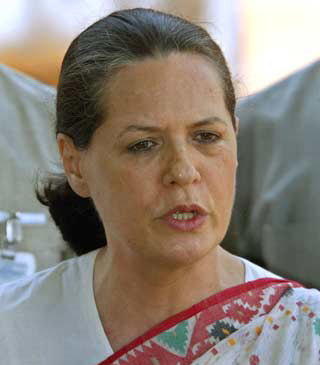
By tying up with the Samajwadi Party, Sonia Gandhi is looking beyond the Nuke deal to safeguard her political future which depends on how important a role she will get to play after the next elections.
While presenting his first Union budget in 1991, Manmohan Singh, then finance minister, said, “No power on earth can stop an idea whose time has come.” Last week, the prime minister, perhaps among the least combative to have occupied the high office, decided that it was time he lived up to Victor Hugo’s words and did something that would once and for all put an end to the frequent taunts of being “the weakest prime minister India has ever had”. While in Japan to attend the G-8 Summit, he announced that India would be going to the International Atomic Energy Agency (iaea) to seek its approval for the civil nuclear agreement with the US. In doing so, he displayed a resolve that he has seldom shown in the past. After all, it was only during the last session of Parliament that, faced with the stiff opposition even from upa allies, the Government had almost shelved the deal. The opposition parties took it as further proof of the lameness of the governing duck. Now, there is a spring in upa’s step as reflected in the alliance’s readiness to seek a confidence vote on an issue which is likely to get submerged in a year of double-digit inflation and internal security disasters. Less than a month ago, the deal was considered as good as dead and the Gole Market commissars were gloating “we told you so”. Why then this sudden confrontationist mood in upa whose reputation for succumbing to pressure from allies even makes the word “coalition” look unholy? The reality is that upa’s decision to flex its muscles did not come overnight. For the last few months, it has been clear as morning light that the Congress was looking for an excuse to get rid of the heavy baggage that is the Left, a party which it has to confront in two big states in a few months. For the upa Government, the Left’s utility value had run out. For the past few months, Manmohan may have been obsessed with the N-deal, but Sonia Gandhi was looking at life beyond the summer of 2009. So far, she kept the Left in good humour. But on an issue that’s hugely important for the Government, she turned in a performance of great maturity. She taunted them and made them withdraw support.But not before ensuring that there is life after the Left. For her, the nuclear deal was a camouflage to safeguard her own political future, knowing that her relevance in national politics will depend on how important a role she will be able to play in the 15th Lok Sabha. She was canny enough to let Manmohan start a N-deal duel with the Left way back in 2006, but by setting up the Left-upa coordination committee, she sought to convey the impression that, on the N-deal, she and the prime minister were not on the same wavelength. That unlike him, she was keen that the ties flourish. The Left trusted her honourable instincts, oblivious of the fact that she was seeking out potential partners for a tie-up that would go beyond merely rescuing the upa Government in the event of pullout by the Left. She kept herself abreast of all details about deadlines for India to approach both iaea and Nuclear Suppliers Group (nsg), using her independent sources in the foreign office and elsewhere even as the prime minister was pushing for an immediate showdown with the Left. The fact that Ronen Sen, India’s Ambassador to the US and a close friend of the Gandhi family, was asked to continue beyond his tenure is perhaps proof of the hawk’s eye she kept on the N-deal related developments. At home, the turning point was Mayawati’s rise in Uttar Pradesh last year. Sonia initially tried to cosy up to the Bahujan Samaj Party (bsp) chief who spurned her advances. That was Mayawati’s way of conveying to Sonia and Rahul Gandhi that she had added them to the list of those she intended to pursue. The list till then consisted of the names of Mulayam Singh Yadav and Amar Singh. The Samajwadi Party (sp) leaders, until then also hounded by the upa Government and the Gandhi family, were looking for the right opportunity to make up. The story then took a sad twist, which leaders of the two parties hope will have a happy ending. Upon Amar Singh’s father’s death, condolence letters went out to him from Manmohan, Sonia and Rahul. Those were followed up with phone calls which continued even when Amar Singh underwent prolonged treatment in a US hospital. Other gestures followed, like the Z-class security that was suddenly put in place for the sp leader. And when the upa Government celebrated its fourth anniversary in office in May, Amar Singh was invited to the dinner that the prime minister hosted. Such small gestures matter a lot to Amar Singh and you could sense that a new relationship was blossoming. With the Government no more dependent on the Left, it is a win-win situation for Sonia and Manmohan. By getting sp on board, they have virtually dismantled the United National Progressive Alliance (unpa)—the Third Front in its latest avatar—which was talking in terms of staking claim for the post of prime minister on the strength of a hundred seats or thereabouts. Even diehard optimists within the Left don’t believe they will come anywhere near the 14th Lok Sabha tally of 61. And with Congressmen conceding the likelihood of losses in Andhra Pradesh, Delhi, Haryana, Assam, it’s Gujarat, Kerala, West Bengal and Uttar Pradesh that offer hope for the party. But none so much as the last, with its 80 seats where currently the Congress is a fringe player. But in association with sp, it could prove a formidable combine. Don’t be surprised then, if, as the date of the trust vote approaches, Parliamentary Affairs Minister Vayalar Ravi takes a break and passes on the job of floor coordination to Amar Singh. The UPA Government may just sail through.
the nuclear deal was a camouflage to safeguard her own political future, knowing that her relevance in national politics will depend on how important a role she will be able to play in the 15th Lok Sabha. She was canny enough to let Manmohan start a N-deal duel with the Left way back in 2006, but by setting up the Left-upa coordination committee, she sought to convey the impression that, on the N-deal, she and the prime minister were not on the same wavelength. That unlike him, she was keen that the ties flourish. The Left trusted her honourable instincts, oblivious of the fact that she was seeking out potential partners for a tie-up that would go beyond merely rescuing the upa Government in the event of pullout by the Left. She kept herself abreast of all details about deadlines for India to approach both iaea and Nuclear Suppliers Group (nsg), using her independent sources in the foreign office and elsewhere even as the prime minister was pushing for an immediate showdown with the Left. The fact that Ronen Sen, India’s Ambassador to the US and a close friend of the Gandhi family, was asked to continue beyond his tenure is perhaps proof of the hawk’s eye she kept on the N-deal related developments. At home, the turning point was Mayawati’s rise in Uttar Pradesh last year. Sonia initially tried to cosy up to the Bahujan Samaj Party (bsp) chief who spurned her advances. That was Mayawati’s way of conveying to Sonia and Rahul Gandhi that she had added them to the list of those she intended to pursue. The list till then consisted of the names of Mulayam Singh Yadav and Amar Singh. The Samajwadi Party (sp) leaders, until then also hounded by the upa Government and the Gandhi family, were looking for the right opportunity to make up. The story then took a sad twist, which leaders of the two parties hope will have a happy ending. Upon Amar Singh’s father’s death, condolence letters went out to him from Manmohan, Sonia and Rahul. Those were followed up with phone calls which continued even when Amar Singh underwent prolonged treatment in a US hospital. Other gestures followed, like the Z-class security that was suddenly put in place for the sp leader. And when the upa Government celebrated its fourth anniversary in office in May, Amar Singh was invited to the dinner that the prime minister hosted. Such small gestures matter a lot to Amar Singh and you could sense that a new relationship was blossoming. With the Government no more dependent on the Left, it is a win-win situation for Sonia and Manmohan. By getting sp on board, they have virtually dismantled the United National Progressive Alliance (unpa)—the Third Front in its latest avatar—which was talking in terms of staking claim for the post of prime minister on the strength of a hundred seats or thereabouts. Even diehard optimists within the Left don’t believe they will come anywhere near the 14th Lok Sabha tally of 61. And with Congressmen conceding the likelihood of losses in Andhra Pradesh, Delhi, Haryana, Assam, it’s Gujarat, Kerala, West Bengal and Uttar Pradesh that offer hope for the party. But none so much as the last, with its 80 seats where currently the Congress is a fringe player. But in association with sp, it could prove a formidable combine. Don’t be surprised then, if, as the date of the trust vote approaches, Parliamentary Affairs Minister Vayalar Ravi takes a break and passes on the job of floor coordination to Amar Singh. The UPA Government may just sail through. INTERVIEW with ASIF ALI ZARDARI/India Today, July 21, 2008


“I DON’T REMOTE CONTROL THE GOVERNMENT”
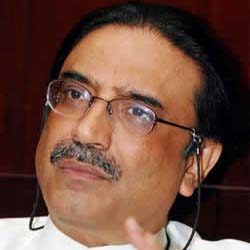
It’s not often that a Pakistan politician sits down for an interview and refrains from what is a favourite topic—India-bashing. Asif Ali Zardari is the exception. The 52-year-old co-chairman of the Pakistan People’s Party (ppp) spent much of a 90-minute interview (watch interview) with me for Aaj Tak tv channel talking about completing Benazir Bhutto’s unfinished task and the need for strengthening Indo-Pak relationship. Excerpts:
Q. How much has your life changed after Bibi’s untimely death?
A. Not just my life has changed, but that of Pakistan and also of the world has changed. As long as she was around, I had no worries. She was there to take care of everything.
Q. You were in jail for almost 11 years. You both were fighting, Bibi from outside and you from behind the bars.
A. Yes, we were together in our fight. Even today, I feel she is very much around, in spirit.
Q. In my last interview with her, Bibi told me, “I know that my life is under threat but I’m going to Pakistan just for the sake of democracy. My biggest task will be to end military rule”. She sacrificed her life to restore democracy in the country. But even six months after her death, military rule is not yet over.
A. Her sacrifice will not go waste. We are working towards restoring democracy. Military rule is there but it is not Pervez Musharraf who is holding any such post.
Q. People of Pakistan elected both the pml-n and the ppp with this hope. Both of you were for his removal. So why is it taking so much of time?
A. Unlike India, we never had a coalition government. This is the first-time for us. Both the parties have almost equal number of seats. Even if we combine together, we will still fall short of the required number to oust him. We don’t even have the support of other parties.
Q. Have you set any time frame for Musharraf’s ouster?
A. Politicians seldom stick to deadlines. But we will pack him off soon.
Q. You are the working president of the party though your son Bilawal is the chairman. Why so when you could have done it yourself?
A. We have chosen Bilawal because he is our future, he is our present. Our new slogan: Bhutto ki tasveer Benazir, Benazir ki tasveer Bilawal (Benazir is Bhutto’s image and Bilawal is Benazir’s). Bilawal is our future. I am just a trustee of Benazir’s legacy.
Q. People say you are Pakistan’s Sonia Gandhi. Like she controls the Government from 10, Janpath in Delhi you do the same from Bilawal House in Karachi.
A. No, I don’t try and control the Government from Bilawal House as most of the time I am in Islamabad. "Soniaji is a great leader and I am trying to learn the nuances of democracy from her, no doubt. She is my role model." And if I had to control the Government, I could have very well become the prime minister. I had the option of taking up the post but I chose to manage the party instead. It is a greater responsibility.
Q. In last 100 days, you haven’t done anything substantial to speed-up probe in Bibi’s assassination.
A. Here in Pakistan, I see a larger conspiracy behind her assassination. I just don’t want to find out who killed her, but my sole motive is to let the world know what her death could lead to. It could lead to Balkanisation of Pakistan which would mean Balkanisation of the entire region.
Q. It was believed that Bibi was a staunch supporter of the US. And she was eliminated entirely for this reason. She was a target of the fundamentalists, so do you think you are also influenced by America?
A. We have sought the support of all political parties to restore democracy in the country. America, Britain and India, all are democratic forces. Bibi went to all such countries and her visits acted like a catalyst which in turn was of great help in the longer run. She ruled even though she stayed away from the country.
Q. Is ppp soft on the US, like Nawaz Sharif pointed out a few days ago? Do you agree that the US is interfering a lot in your domestic matters?
A. America is an ally. Taliban was a problem and will be a problem. We have to fight them out and we are trying our best to oust them. We may have to talk it out or have to fight with the fundamentalist forces. We might have to motivate them and bring them into our fold.
Q. Why don’t you forget Kashmir for a while? Why should India and Pakistan fight over it?
A. We can’t forget Kashmir. Like you, we also want an amicable solution to this problem. We want to talk out this issue. We want trade. Think of it, both India and Pakistan together can become superpower.
Q. For confidence building measures, India feels that Pakistan should dismantle its terror camps in Kashmir and stop interfering in its domestic matters. Will your government do so?
A. Neither we interfere in anyone’s matters nor we like others to interfere in ours’. We are against terrorism.
Q. Sharif said that visa should be abolished. Will you support him?
A. If he brings this Bill in Parliament, we have enough majority to promulgate it.
Q. To improve trade, why don’t you give any preferential treatment to India?
A. We are willing to give preferential treatment and want the same in return. We want India to play the role of an elder brother in the subcontinent. Pakistan can very well become a catalyst for India’s progress. If India and Pakistan unite, we will undoubtedly become a force to reckon with.Now, five rapid-fire questions:
Q. Who is your friend, Sharif or Musharraf?
A. Nawaz Sharif.
Q. Who do you hold responsible for Kargil fiasco?
A. It is history’s ex-factor and I hold both of them responsible for it.
Q. Will you ever be able to arrest Bibi’s assassins?
A. Bibi, in her book, had written that her death would become the catalyst for change. We will certainly get hold of them, but we want to change the nizam (system) of Pakistan.
Q. Would you like to become the prime minister of Pakistan?
A. I will not say that I will never become one, but surely will try not to.
Q. Will you join hands with China to procure weapons or befriend India to become an instrument in Pakistan’s progress?
A. I would like Pakistan to progress for which I would not mind being friends with both India and China.
Tuesday, July 8, 2008
Let’s elect our Guvs/Mail Today, July07,2008
 We love to make tall claims about being the world’s largest democracy but when you look at those men and women who live in the Raj Bhavans around the country, we realise how far we are from being areal democracy. The unelected office of Governor is the most misused and abused one in the country. There have been governors who have brought infamy to their offices. Last week, one more joined that disgraceful list. NN Vohra was in office for less than a week when, in an attempt to bail out the Ghulam Nabi Azad Government which had been reduced to a minority after the withdrawal of coalition partner PDP, he revoked the decision of his immediate predecessor, Lt Gen SK Sinha to allot land to the Amarnath Shrine Board. AGovernor is bound by the advice of his council of ministers and Sinha's decision had been cleared by the Cabinet. No such constitutional niceties for Vohra. He was faced with adouble whammy: The militants were making the predictable noises and aCongressled government in peril. So, he unilaterally decided to withdraw the offer his predecessor made. You wouldn’t expect aseasoned bureaucrat, who has been Union Home and Defence Secretary to be so shortsighted. But he was and m
 issed his target by miles. He wanted to douse Muslim anger but has ended up pitting community against community. This is the kind of response one expected from boorish governors like Buta Singh. Vohra was thought to be cut in the mould of governors like SK Singh, SS Sidhu, and TV Rajeshwar or ND Tewari, RL Bhatia or SS Barnala. The first three, like him, are retired civil servants while the rest are experienced politicians. Not the kind that acts first and thinks later. In fact, as abureaucrat, Vohra was known to think so much that he often forgot to act. An exemplar of such dithering is the Vohra Committee Report that looked into the alleged nexus between criminals and politicians and found nothing more substantive than the fact that there was a nexus. As if that was astate secret. No wonder the report was not fit to be made public. This is not to suggest that Lt Gen Sinha was the epitome of gubernatorial propriety. His political leanings were no secret, dictated in part perhaps by his supercession for Army Chief by the Indira Gandhi government in 1983. But as governor, he must have been doing something right. What else explains the fact that though he was posted in Srinagar in 2003, by the then NDA government, the UPA continued with him till the end of his tenure afortnight ago. In this instance, he did what is expected of any good administrator: To give better sanita- tion facilities to the lakhs of pilgrims. So he got the land transferred. Then followed ugly scenes of PDP leader Mehbooba Mufti holding Sinha responsible for the riots and the latter responding by calling her party anti- national, not to forget that Yasin Malik got yet another chance to fast unto death. Enter Vohra. Government saved, but the two communities are divided like never before. Ideally, governors have no place in aset- up like ours. If they are amust, let them get elected.
Subscribe to:
Posts (Atom)